
What Geological and Geophysical Consultants Do
Geological and geophysical consulting services help companies and governments understand what lies beneath the earth’s surface. These specialists use science and technology to find valuable resources, assess land stability, and reduce risks for construction and development projects.
Think of these consultants as detectives who read the clues hidden in rocks, soil, and underground structures. Their work supports many industries including oil and gas, mining, construction, water management, and environmental protection.
Core Services Offered
Resource Exploration
Consultants locate valuable materials beneath the ground. They find:
- Oil and natural gas deposits
- Mineral resources like gold, copper, and rare earth elements
- Groundwater for drinking and irrigation
- Geothermal energy sources
Site Assessment
Before construction begins, these experts evaluate land conditions:
- Soil composition and stability
- Rock formations and fault lines
- Flood risk and drainage patterns
- Potential hazards like sinkholes or unstable slopes
Environmental Studies
Consultants help protect natural resources through:
- Contamination assessment and monitoring
- Remediation planning for polluted sites
- Groundwater protection strategies
- Impact studies for proposed developments
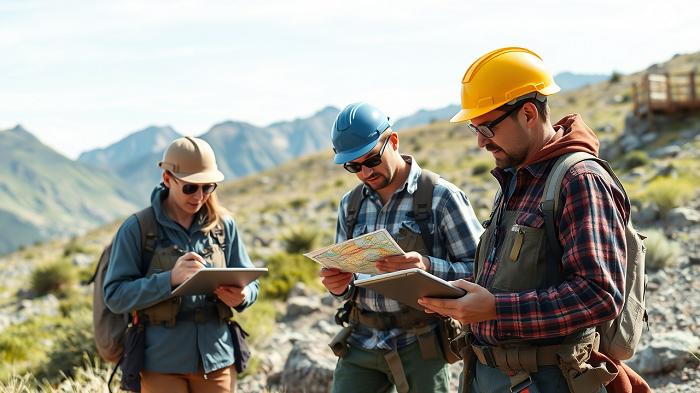
Field geologists collecting data to map underground resources
Risk Evaluation
These professionals identify and manage earth-related risks:
- Earthquake and volcanic hazard assessment
- Landslide and ground stability analysis
- Flood zone mapping
- Subsidence prediction (when ground sinks)
Legal and Regulatory Support
Consultants provide expert testimony and documentation for:
- Land use permits
- Resource rights disputes
- Environmental compliance
- Insurance claims related to geological events
Methods and Technology
Modern geological and geophysical consultants use a mix of traditional field methods and advanced technology:
Field Methods
- Rock and soil sampling
- Surface mapping
- Test drilling and core analysis
- Field observations and measurements
Laboratory Analysis
- Mineral and rock testing
- Chemical composition analysis
- Age dating of materials
- Physical property testing
Advanced Technologies
- Satellite imagery and remote sensing
- Ground-penetrating radar
- Seismic surveys that create sound waves to map structures
- Electromagnetic surveys to detect variations in conductivity
- Gravity and magnetic field measurements
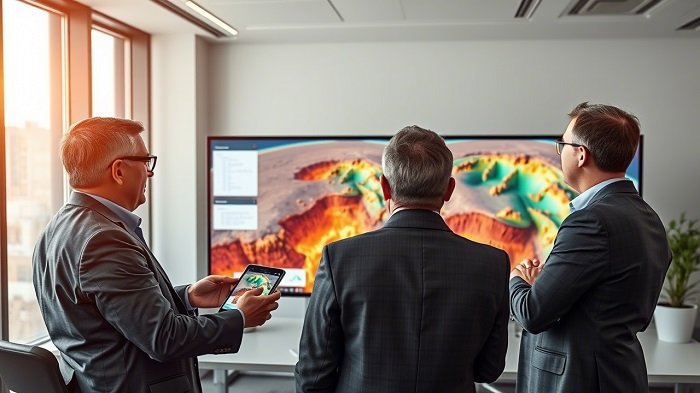
- 3D modeling and visualization software
Industries Served
Geological and geophysical consultants work across many sectors:
Energy Industry
Consultants help energy companies:
- Find new oil and gas reserves
- Evaluate potential drilling sites
- Identify geothermal resources
- Site renewable energy projects
Mining Companies
These specialists assist miners to:
- Discover mineral deposits
- Estimate resource quantities
- Plan extraction methods
- Manage mine stability
Construction and Engineering
Before and during building projects, consultants:
- Evaluate foundation conditions
- Identify potential hazards
- Recommend construction techniques
- Monitor site stability
Water Resource Management
Communities rely on these experts to:
- Find groundwater sources
- Protect aquifers from contamination
- Design wells and water systems
- Manage flood risks
Government Agencies
Public entities use consulting services for:
- Natural hazard mapping
- Land use planning
- Environmental protection
- Infrastructure development
Benefits of Professional Consulting
Risk Reduction
Proper geological assessment prevents costly mistakes:
- Avoiding unstable building sites
- Preventing environmental damage
- Reducing exploration costs
- Designing appropriate foundations
Resource Optimization
Consultants help clients:
- Target drilling in the most promising locations
- Extract resources more efficiently
- Reduce waste and environmental impact
- Extend the life of existing resources
Regulatory Compliance
Expert guidance ensures projects:
- Meet environmental standards
- Follow industry regulations
- Obtain necessary permits
- Document conditions properly
Investment Protection
Good geological information protects financial interests:
- More accurate resource estimates
- Better understanding of development costs
- Identification of potential problems early
- Data-driven decision making
Choosing the Right Consultant
When selecting geological or geophysical consultants, consider:
Expertise Match
Find consultants with experience in your specific needs:
- The right industry background
- Familiarity with your region’s geology
- Experience with similar projects
- Specialized knowledge relevant to your goals
Technology Capabilities
Look for firms that use:
- Current equipment and software
- Advanced analytical methods
- Up-to-date data processing techniques
- Integration of multiple information sources
Track Record
Evaluate potential consultants based on:
- Past project successes
- Client testimonials
- Published research or reports
- Industry reputation
Communication Skills
Choose consultants who:
- Explain complex concepts in clear terms
- Provide detailed yet understandable reports
- Respond to questions promptly
- Work well with your team
Common Challenges in Geological Consulting
Data Limitations
Earth science involves working with incomplete information:
- Limited sampling points
- Variations between test locations
- Historical changes in the environment
- Natural complexity of geological systems
Interpretation Differences
Geological data often allows multiple interpretations:
- Different experts may reach different conclusions
- Models contain inherent uncertainty
- New data may change understanding
Project Constraints
Real-world factors affect consulting work:
- Budget limitations restrict testing
- Time pressure may limit investigation scope
- Access issues can prevent ideal sampling
- Weather and field conditions affect data collection
Changing Conditions
Earth systems change over time:
- Groundwater levels fluctuate
- Erosion alters surface features
- Human activity modifies natural conditions
- Climate change affects geological processes
Future Trends in Geological Consulting
The field continues to evolve with new approaches:
Integration with Data Science
- Machine learning to identify patterns
- Big data analysis of geological information
- Automated interpretation systems
- Remote monitoring networks
Environmental Focus
- Carbon capture and storage site assessment
- Renewable energy resource mapping
- Climate change adaptation planning
- Sustainable resource development
Advanced Visualization
- Augmented reality field tools
- Virtual reality for data exploration
- Real-time 3D modeling
- Digital twins of geological systems
Drone and Autonomous Systems
- Unmanned aerial surveys
- Robotic sample collection
- Automated monitoring stations
- Remote sensing networks
FAQ About Geological and Geophysical Consulting
Q: How long does a typical geological assessment take? A: The timeline varies based on project scope. Simple site assessments might take weeks, while complex resource exploration projects can span months or years.
Q: What information do consultants need to start a project? A: Helpful information includes property boundaries, previous studies, project goals, known issues, historical land use, and access permissions.
Q: How accurate are resource estimates from geological consultants? A: Accuracy depends on data quantity and quality. Initial estimates may have wide ranges, but accuracy improves as more information becomes available.
Q: Can geological consultants guarantee they will find resources? A: No ethical consultant offers guarantees. They provide probability assessments based on evidence and indicate confidence levels in their findings.
Q: What does geological consulting typically cost? A: Costs vary widely based on project scope, methods used, location, and required expertise. Simple consultations may cost thousands, while major exploration programs can cost millions.
Q: How often should geological conditions be reassessed? A: Reassessment timing depends on project type, risk level, and changes in the environment. Critical structures may need monitoring for their entire lifespan.
Q: Do I need both geological and geophysical consulting? A: These disciplines complement each other. Geological work focuses on physical materials, while geophysical methods provide information about structures and properties that can’t be seen directly.
Conclusion
Geological and geophysical consulting provides the foundation for responsible resource development, safe construction, and environmental protection. These earth science professionals bridge the gap between scientific knowledge and practical application. Their expertise helps clients make informed decisions about how to work with—rather than against—the natural conditions beneath our feet.
In a world with growing resource demands and increasing environmental concerns, the value of accurate geological and geophysical information continues to rise. Whether searching for new energy sources, planning sustainable development, or protecting communities from natural hazards, these consultants play a crucial role in our relationship with the Earth.